Markets, ETFs and allocation
Building an allocation means accepting that you cannot predict the market. This section gathers articles on diversification, choosing investment vehicles and market recaps.
None of this content is personalised advice: it describes mechanisms and trade-offs to help you ask the right questions.
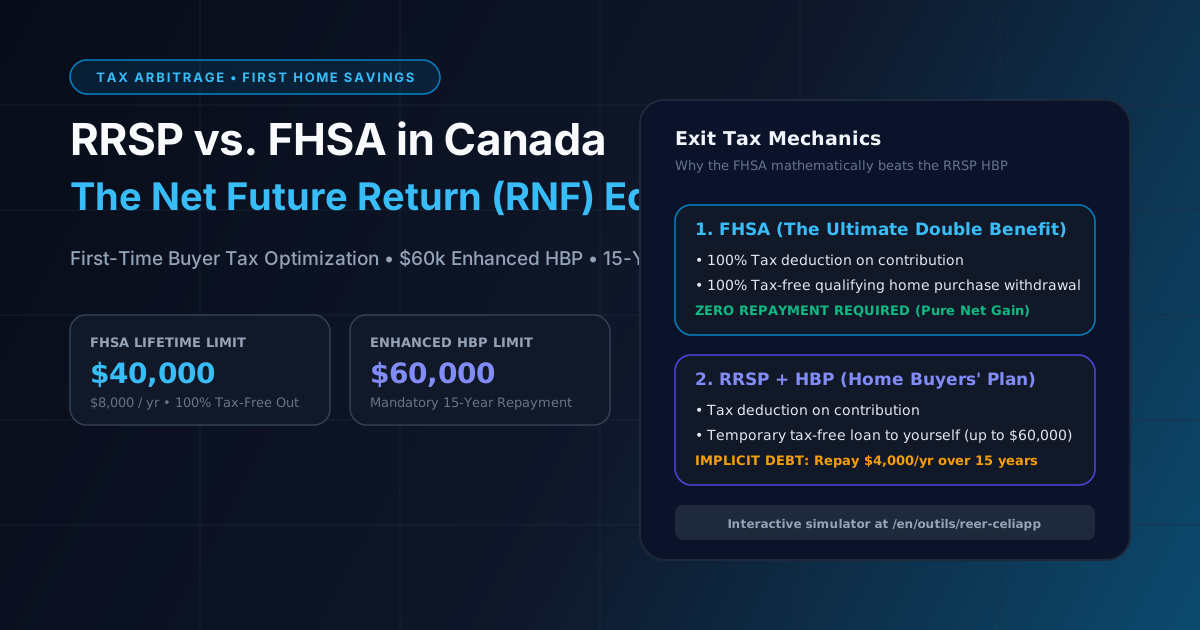
RRSP vs. FHSA in Canada: Mathematical Tax Arbitrage, Marginal Rate Differentials, and the $60,000 Home Buyers' Plan (HBP)
Quantitative guide to Canadian registered account optimization: combined federal-provincial tax brackets, FHSA ($8,000/yr, $40,000 cap) vs. RRSP, the $60,000 HBP repayment drag, and the $100,000 tax-sheltered down payment strategy.
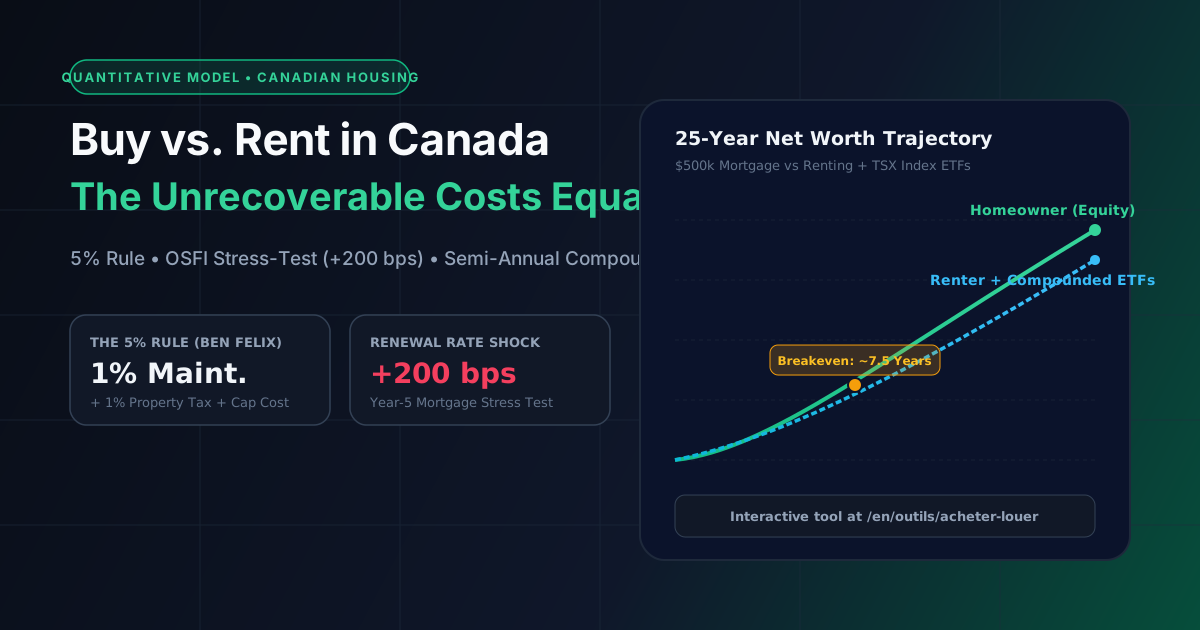
Buy vs. Rent in Canada: The 5% Rule of Unrecoverable Costs, Semi-Annual Compounding, and the +200 bps Renewal Stress Test
An institutional quantitative framework comparing homeownership and renting paired with TFSA/FHSA ETF investing across Canadian provinces: CMHC insurance, land transfer taxes, unrecoverable ownership drag, and OSFI B-20 renewal shocks.
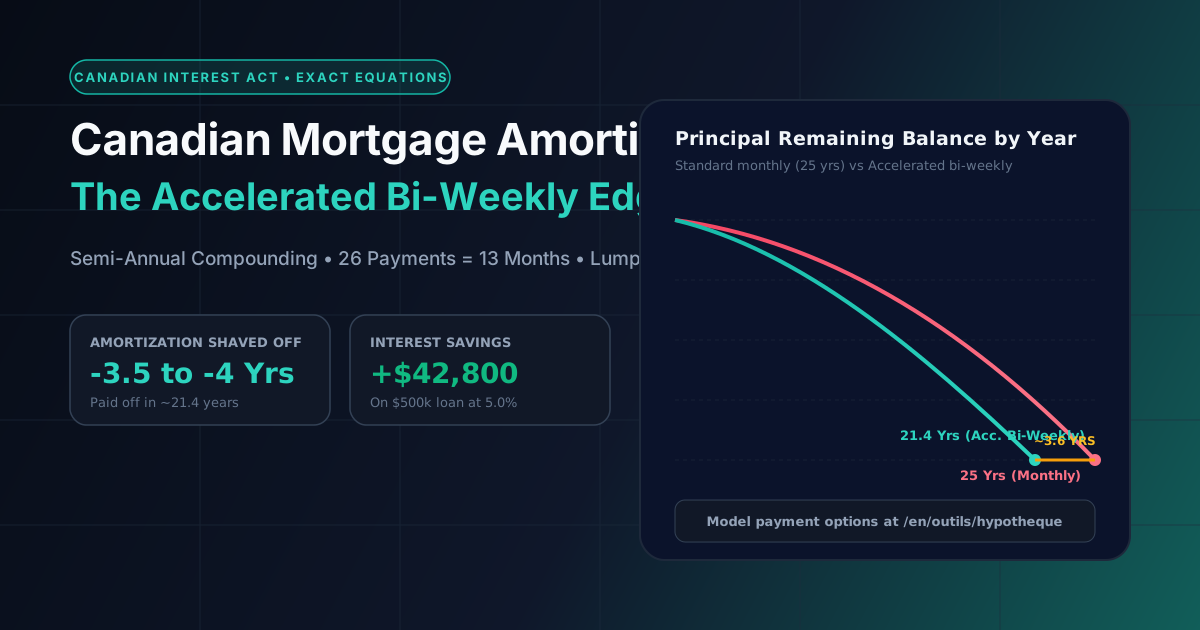
Canadian Mortgage Amortization Explained: Semi-Annual Compounding Mechanics and the Accelerated Bi-Weekly Advantage
Actuarial breakdown of Section 6 of the Canadian Interest Act, equivalent periodic rates, CMHC default insurance tiers, 30-year insured amortizations, and how accelerated bi-weekly payments cut 3.3 years off your mortgage.
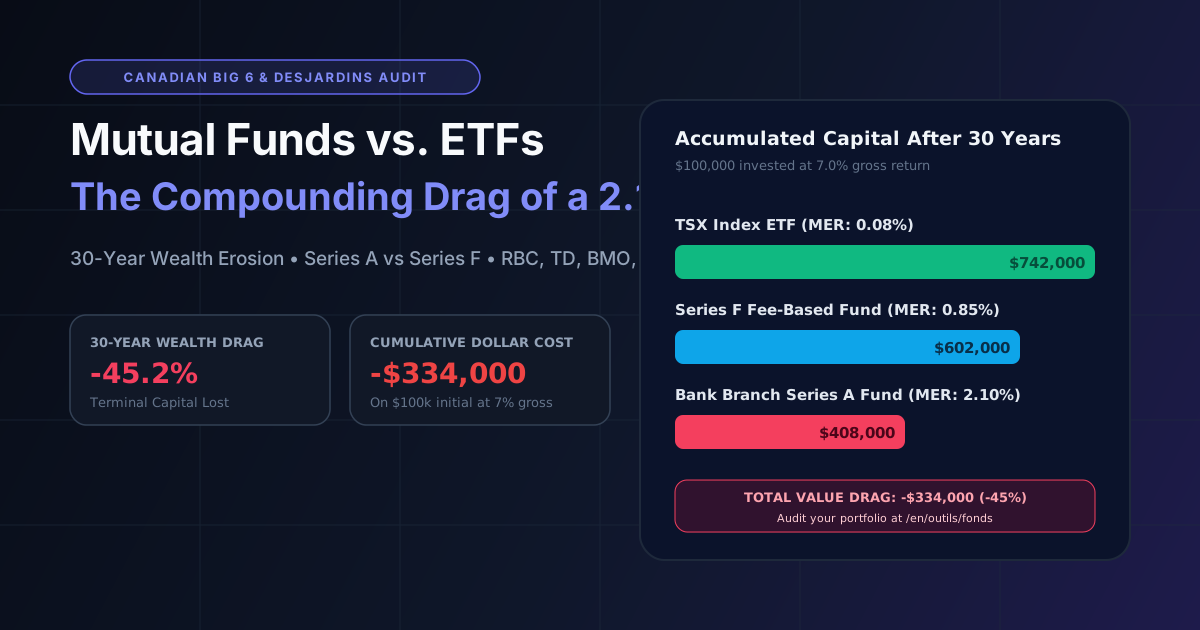
The True Cost of Mutual Fund MERs in Canada: Series A vs. Series F vs. TSX-Listed ETFs Across the Big 6 Banks & Desjardins
An institutional quantitative breakdown of Management Expense Ratio (MER) compound drag in Canada: trailing commissions, CRM2 / Total Cost Reporting (TCR), SPIVA Canada data, and how switching from a 2.05% Series A bank fund to a 0.06% TSX ETF saves $195,000+.
Inverted Yield Curve: What Does It Really Say About an Upcoming Recession?
Since 1976, an inversion of the 10-year minus 2-year spread has preceded each of the six US recessions, 10 to 24 months ahead. Yet the record 2022-2024 inversion has not been followed by any recession so far. The official data, episode by episode.

Sector ETF vs Index ETF: Which Should You Choose?
A sector ETF promises higher upside, but at what risk cost? A comparison with the classic broad index ETF.

Currency Risk in Your Portfolio: Understanding and Managing FX Exposure
Investing internationally mechanically exposes a portfolio to currency swings that can amplify or wipe out the underlying assets' performance. A close look at portfolio currency risk, with numeric examples.