Sector ETF vs Index ETF: Which One Belongs in Your Portfolio?

The rise of ETFs has democratized access to investment strategies once reserved for professionals. Among the choices facing individual investors, the distinction between a broad index ETF and a sector ETF is one of the most structurally important for portfolio construction — and yet one of the most misunderstood.
A sector ETF can look appealing when an industry like technology or healthcare posts spectacular returns. But this concentration comes with a risk cost that must be quantified carefully before investing.
Two different construction philosophies
A broad index ETF replicates an entire market index, such as a global or national equity index spanning hundreds or even thousands of companies across every economic sector. Its purpose is to capture the average performance of the economy as a whole, with very high built-in diversification.

A sector ETF, by contrast, replicates a basket of companies belonging to a single industry: technology, healthcare, energy, finance, discretionary consumer goods, and so on. It lets an investor express a specific conviction about the future performance of a given industry, rather than betting on the economy as a whole.
A radically different risk exposure
This construction difference has deep implications for risk profile. In a broad index ETF, adverse moves in one sector are largely offset by performance in other sectors. In a sector ETF, no such shock absorber exists: the fund's performance is directly and entirely tied to the fate of the chosen industry.
The risk-return trade-off
Higher upside potential

When a sector goes through a strong growth cycle — driven, for instance, by a major technological breakthrough or a favorable regulatory shift — a concentrated sector ETF can deliver returns far above those of a broad index, precisely because it doesn't dilute that performance across the entire market.
Higher volatility and internal correlation
This potential has a direct counterpart: a sector ETF's volatility is structurally higher than that of a diversified index. Companies within the same industry tend to react similarly to the same macroeconomic, regulatory, or technological shocks, creating high internal correlation within the fund — the opposite of the diversification effect sought when building an overall portfolio.
Vulnerability to sector-specific shocks
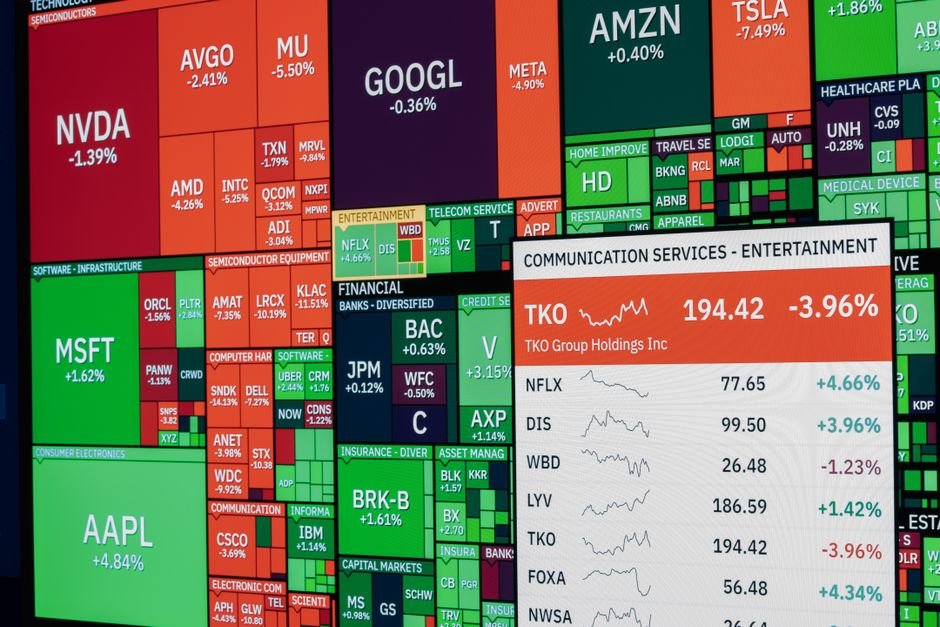
A sector ETF is also exposed to idiosyncratic risks unique to that industry: tighter healthcare regulation, a drop in energy prices, or a supply-chain disruption in technology can hit the entire fund simultaneously, with no other component of the sector left to offset the shock.
Core holding or satellite allocation?
The most common portfolio-management practice is to use a broad index ETF as the portfolio's core — its largest weighted component, meant to capture general economic growth with controlled risk — while reserving sector ETFs for a satellite role: a smaller allocation meant to express specific tactical or thematic convictions.
Why the index fund remains the logical foundation
A broad index ETF offers diversification that mechanically reduces unsystematic risk — the risk specific to a single company or industry. For most investors, whose primary goal is to capture long-term economic growth with minimal management complexity, this diversification is a far more robust starting point than sector concentration.
When a sector satellite makes sense
A sector ETF can be worthwhile when an investor wants to overweight a specific conviction — for example a demographic trend favoring healthcare, or an energy transition favoring certain infrastructure — while keeping a diversified core that limits the impact of a wrong conviction on the overall portfolio.
Worked example: two portfolios facing a sector shock
Compare two €10,000 portfolios invested one year before a sector shock that hits technology hard, dropping 35% within a few months, while a broad index falls only 12% over the same period, cushioned by the relative resilience of other sectors like healthcare and consumer staples.

100% technology-sector portfolio
A portfolio fully invested in a technology ETF would see its value fall to roughly €6,500, a loss of €3,500. Any subsequent recovery would need to close a proportionally larger gap to return to the initial capital.
Diversified broad index ETF portfolio
The same capital invested in a broad index ETF, where technology represents only a fraction of the total weight (around 25% in many global indices), would suffer a much milder decline of about 12%, a loss of €1,200. The rest of the portfolio, spread across sectors unaffected by the shock, absorbs most of the drop.
€10,000 facing a technology shock
This simple exercise illustrates why sector concentration mechanically amplifies drawdowns just as much as it amplifies gains — a central concept in risk management.
Due-diligence questions before adding a sector ETF
Management fees
Sector ETFs generally carry higher expense ratios (TER) than broad index ETFs, due to more specialized management and often smaller assets under management. This extra cost should be justified by the sector conviction, not overlooked in favor of headline performance potential alone.
Concentration within the sector itself
Not all sector ETFs are equal in terms of internal diversification: some are heavily concentrated in a handful of very large companies that make up a disproportionate share of the sector index, reintroducing single-company-specific risk within the sector fund itself.
Fund liquidity
A niche sector ETF may show lower trading volumes than a broad index ETF, which can translate into wider bid-ask spreads on both purchase and sale — a cost factor often underestimated by retail investors.
Summary
The choice between a sector ETF and an index ETF isn't a question of absolute superiority but of role within the overall portfolio. A broad index ETF is generally the logical foundation for most investors, while a sector ETF can play a satellite role for expressing targeted convictions, provided its impact on overall risk is precisely measured.
To compare the historical volatility and sector composition of different ETFs before building your allocation, the free tools available at /outils let you explore this data for strictly educational purposes, never as personalized investment advice.
Frequently asked questions
What is the difference between a sector ETF and an index ETF?
An index ETF tracks a broad index (MSCI World, S&P 500) spanning many sectors and countries. A sector ETF follows a single slice of the economy, such as technology or healthcare. The former spreads risk; the latter concentrates it on a single performance driver.
Is a sector ETF riskier than an index ETF?
Generally yes: fewer holdings and exposure to one sector mean higher volatility and deeper declines during a sector-specific shock. Stocks within the same sector also tend to fall together, which weakens the benefit of internal diversification.
Should sector ETFs be part of a diversified portfolio?
A common approach is to keep a broad index ETF as the portfolio core and limit sector ETFs to a smaller satellite allocation. This lets you express a view on a sector without its potential underperformance compromising the whole allocation.
How do you compare two ETFs before investing?
Look at the ongoing charges (TER), tracking difference against the index, liquidity, replication method and the weight of the top ten holdings. For a sector ETF, also check internal concentration: a handful of companies can make up a very large share of the fund.
Can a sector ETF replace a world ETF?
Not in terms of diversification: a sector ETF depends on the health of a single part of the economy, whereas a world ETF spreads exposure across thousands of companies. Using one instead of the other fundamentally changes the portfolio's risk profile.
From theory to practice
Understand markets and build an allocation: sector versus index ETFs, rebalancing, currency risk and reading market cycles.
Build an ETF plan