Currency Risk in Your Portfolio: Understanding and Managing FX Exposure
Investing internationally mechanically exposes a portfolio to currency swings that can amplify or wipe out the underlying assets' performance. A close look at portfolio currency risk, with numeric examples.
Last methodological review:

Allocation & Regulation · Europe
ETF Allocation Planner
Photo : William Warby — Wikimedia Commons (CC BY 3.0)
France / Europe : French / European tax and regulatory framework (PEA, CTO, ESMA, EUR) — distinct from Canadian registered accounts (RRSP/TFSA/FHSA).
IN THIS ARTICLE
Key Takeaways (TL;DR)
- Over one year, the underlying index rises 12% in dollars, bringing the position's value to about 12,320 dollars.
- Faced with this risk, the asset management industry offers so-called "hedged" versions of many international ETFs.
- For international bond investments, currency hedging is often considered particularly relevant.
- Over a very long horizon, the case for hedging weakens for equity assets, while remaining relevant for bonds.
Portfolio currency risk is one of those realities many retail investors discover too late: holding assets denominated in a foreign currency means the final return, once converted back into your own currency, depends not only on the asset itself but also on the exchange rate movement between the two currencies. A European investor buying a US equity ETF is not just buying exposure to the American market — implicitly, they are also buying exposure to the dollar.
This dimension is often underestimated, even though it can, on its own, turn a positive return into a loss, or conversely amplify an already solid gain. Understanding this mechanism, its numeric consequences, and the tools available to manage it is essential for anyone building an internationally diversified portfolio.
What currency risk actually is
Currency risk refers to the uncertainty over the value, expressed in the investor's reference currency, of an asset denominated in another currency. Take the typical case of a eurozone-based investor holding an ETF that tracks a US index, quoted in dollars. The final return they receive, converted into euros, results from the combination of two distinct factors: the performance of the US index in dollars, and the change in the EUR/USD exchange rate over the holding period.

These two components are not stably correlated over time. They can reinforce each other, partially offset one another, or even work in complete opposition depending on market circumstances.
A numeric example to visualize the mechanism
Suppose a European investor puts 10,000 euros into an unhedged US ETF when 1 euro is worth 1.10 dollars. This gives roughly 11,000 dollars of exposure. Over one year, the underlying index rises 12% in dollars, bringing the position's value to about 12,320 dollars.

If, over the same period, the euro appreciated against the dollar and it now takes 1.20 dollars to buy one euro, converting back to euros yields roughly 10,267 euros — a net gain of just 2.7%, far below the 12% shown in dollars. The euro's strengthening ate up most of the underlying asset's return.
Where the euro return comes from
Conversely, had the euro depreciated over the period, that same 12% return in dollars would have translated into a noticeably higher gain once converted back to euros. This same mechanism can also turn a negative dollar return into a positive euro gain, or the reverse: currency risk is not one-directional — it can cut either way depending on the period considered.
Hedged versus unhedged ETFs: what's the difference
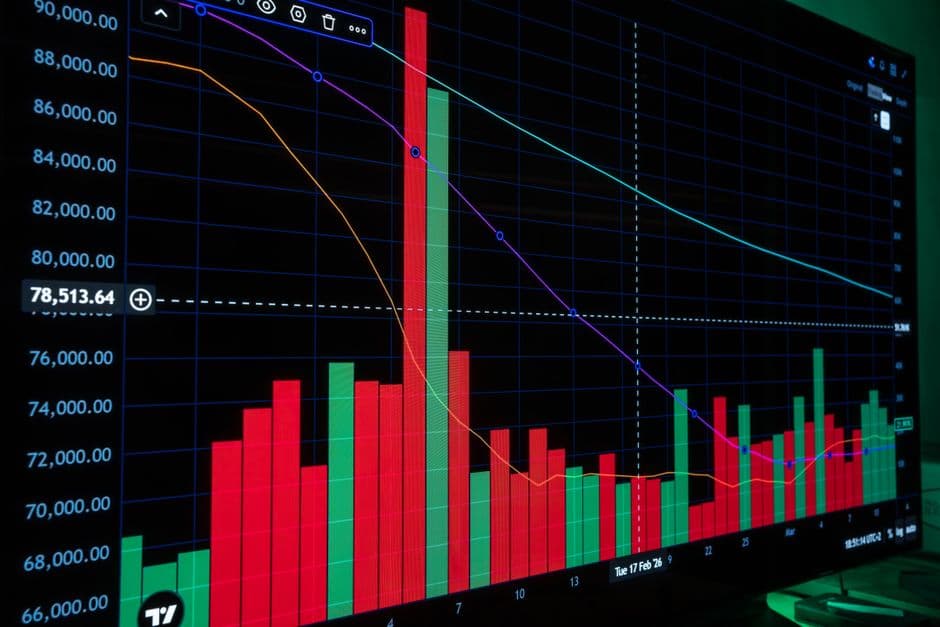
Faced with this risk, the asset management industry offers so-called "hedged" versions of many international ETFs. These funds use financial instruments, typically currency forward contracts, to neutralize as much as possible the impact of exchange rate movements, aiming to give the investor a return close to that of the underlying asset in its original currency.
The cost of hedging
This protection is not free. Currency hedging generates recurring transaction costs, as well as an interest rate differential between the two currencies involved (known as the carry cost), which can be positive or negative depending on prevailing monetary conditions. Over the long run, these costs can represent a meaningful drag on performance, particularly when interest rates between the two currency zones diverge significantly.
Tracking that is never perfect
Currency hedging is also never perfect: it relies on instruments whose maturities and amounts must be regularly adjusted (rebalancing), which introduces a slight tracking difference between the theoretically expected performance and what the fund actually delivers.
When currency hedging generally makes sense
The case of international bonds
For international bond investments, currency hedging is often considered particularly relevant. Bonds, especially high-quality ones with short or medium maturities, offer relatively modest expected returns. Yet currency volatility can far exceed the bond yield itself. Without hedging, currency risk can end up dominating the entire risk profile of an international bond holding, undermining the stability such assets are typically sought for.
The case of long-term international equities: a well-known debate
For equities held over long periods, the question is more debated. Part of the academic literature and portfolio management practice suggests that currency effects tend to fade, or even partially offset one another, over long horizons — several decades — since currencies often fluctuate around a medium-term trend without an extreme permanent drift. This observation, sometimes called the natural long-term dilution of equity currency risk, remains a matter of debate among practitioners and is by no means a certainty applicable to every market configuration or investment horizon.

This is presented here only as an existing debate in the financial literature, not as personalized advice: every situation, horizon, and risk tolerance calls for its own analysis.
Questions to ask before choosing hedged or unhedged
What holding horizon are you considering
The shorter the horizon, the more heavily currency risk can weigh on the final outcome, which generally argues in favor of hedging for short- or medium-term holdings. Over a very long horizon, the case for hedging weakens for equity assets, while remaining relevant for bonds.
What is the nature of the underlying asset
Bonds, with their lower and more stable expected return, tolerate unmanaged currency risk less well than equities, whose own volatility is already higher and can statistically dilute the impact of currency swings.
Is the overall portfolio already diversified across currencies
An investor who already holds assets in several different currencies elsewhere benefits from a form of natural currency diversification, which can reduce the need to hedge every individual position.
What is the real cost of the available hedge
The interest rate differential between the two currencies involved should be examined before choosing a hedged ETF: under certain market conditions, this cost can be significant and deserves to be weighed against the volatility-reduction benefit being sought.
Conclusion
Portfolio currency risk is neither a technical detail to ignore nor an inevitability to be eliminated systematically at any cost: it is a genuine component of an international portfolio's risk profile, one that deserves to be understood before being managed. Between hedged and unhedged ETFs, between bonds and equities, between short and long horizons, the answer depends on an analysis specific to each situation — never a universal rule.
To better visualize how currency movements have historically affected different asset classes, the simulation tools available on TrueVerdikt's /tools/investment-plan allow you to explore these dynamics in an educational way, without substituting for personalized advice.
ETF Allocation Planner
Project deterministic ETF contribution ranges and structure asset classes across tax wrappers.
Open ETF PlannerIndependent financial engineer based in Quebec, Canada, Alain Legrand builds and audits TrueVerdikt's deterministic models: Series A/F mutual fund vs. TSX ETF fee comparisons, RRSP/FHSA tax arbitrage, Canadian mortgage actuarial schedules, and statistical overfitting detection (Deflated Sharpe Ratio & CPCV).
Primary Regulatory & Academic Sources
- OSFI — Guideline B-20 (Residential Mortgage Underwriting) — Residential mortgage underwriting practices, procedures, and minimum qualifying rate stress-test.
- CRA — FHSA, RRSP & Home Buyers' Plan — Official contribution limits ($8,000/yr, $40,000 lifetime FHSA cap), tax deductions, and HBP repayment rules.
- CIFSC — Canadian Investment Funds Standards Committee — Standardized classification of Canadian mutual funds and ETFs used across our MER fee comparator.
- Bailey & López de Prado (2014) — The Deflated Sharpe Ratio — Correcting for Selection Bias, Backtest Overfitting, and Non-Normality. The Journal of Portfolio Management, 40(5), 94–107 (SSRN).
Keep reading
All articles in this section « Macro & rates » →
Circular AI Financing, CUDA vs. TPU/Trainium, and Risk Parity: Auditing Global Portfolio Exposure

Buying NVIDIA (NVDA) & Anthropic (ANT) in USD from Canada: FX Fees, Norbert's Gambit, CDRs, and RRSP/TFSA Tax Rules
